Maitreyi Paradigm- The Art and Science of Being Happy
  • Home
  • Maitreyi
    • Artistic Expressions
    • The Yogini Journey
    • Magical Paradigm
    • Blog
    • Contact Me
  • Ascension
    • Ascension Insights
    • Energy Dimensions
    • Quantum Ascension
  • Himalayan Masters
    • Ashtanga Yoga
    • Sounds and Music
    • Vedic Wisdom
  • Self-Discovery Journals
    • Books
    • Everyday Use Journal-Notebooks
  • Healing
    • Arts and Crafts
    • Daily Inspiration
  • Magic
    • Crystal Energy
    • Natural Mysticism
    • Inspired Living
  • Lifestyle
    • Green Living
    • Wellness

The Shinto Tradition of Japan: A Journey into the Heart of Nature and Spirituality

3/17/2023

0 Comments

 
The Shinto tradition, deeply rooted in the history and culture of Japan, offers a unique spiritual perspective that celebrates the beauty and sanctity of the natural world.

​As the indigenous faith of the country, Shinto has shaped the lives and beliefs of the Japanese people for centuries, providing a rich tapestry of rituals, myths, and customs that permeate every aspect of their society. In this article, we delve into the fascinating world of the Shinto tradition, exploring its origins, core beliefs, and the enduring impact it has had on Japanese culture and spirituality.
​
Shinto, which translates to "the way of the gods," is an ancient spiritual tradition that predates the arrival of Buddhism and other foreign influences in Japan. While it has no founding figure or official scripture, Shinto is based on the worship of numerous deities, known as kami, which are believed to inhabit the natural world and influence human affairs. These kami can take various forms, from natural elements such as mountains, rivers, and trees, to ancestral spirits and historical figures who have been deified for their exceptional virtues.

At the heart of Shinto is the belief in the interconnectedness of all living beings and the natural world, which is seen as a manifestation of the divine. This worldview emphasizes the importance of harmony, purity, and gratitude in one's relationship with the environment and the spiritual realm. Shinto practices often involve rituals and ceremonies aimed at honoring the kami, seeking their guidance and blessings, and purifying oneself from spiritual impurities.

Shinto shrines, which can be found throughout Japan, serve as sacred spaces where people can connect with the kami and express their devotion. These shrines are characterized by their distinctive architecture, which includes features such as the torii gate, a symbol that marks the entrance to the sacred precinct, and the shimenawa, a sacred rope adorned with paper zigzag streamers known as shide, used to demarcate the sacred space.

​Visitors to Shinto shrines typically engage in various rituals, such as cleansing themselves with water at a purification font, offering prayers and symbolic gifts to the kami, and partaking in seasonal festivals and ceremonies.
Picture
Shinto has had a profound influence on Japanese culture and society, shaping the nation's values, arts, and customs. The reverence for nature and the spiritual dimension of life that underlies Shinto beliefs has fostered a deep appreciation for aesthetics, simplicity, and balance in the Japanese way of life. This can be seen in various aspects of Japanese culture, from the design of traditional gardens and tea ceremonies to the practice of martial arts and the appreciation of natural beauty in the form of cherry blossoms, autumn foliage, and other seasonal phenomena.

In conclusion, the Shinto tradition of Japan offers a unique and deeply-rooted spiritual perspective that has enriched the lives of the Japanese people for centuries.

​By embracing the sanctity of nature, the wisdom of the kami, and the interconnectedness of all beings, Shinto has fostered a harmonious and spiritually attuned society that continues to captivate the hearts and minds of those who encounter its timeless beauty and wisdom. Whether experienced through the serene tranquility of a Shinto shrine or the vibrant celebrations of a seasonal festival, the Shinto tradition offers a profound and inspiring glimpse into the spiritual heritage of Japan.
0 Comments

The Healing Sounds of Tibetan Singing Bowls: A Journey into Ancient Vibrational Therapy

3/16/2023

0 Comments

 
Tibetan singing bowls, with their mesmerizing sounds and rich history, have long been revered for their ability to promote relaxation, healing, and spiritual growth. These unique instruments, originating from the Himalayan regions of Tibet, Nepal, and India, have been used for centuries in meditation, ceremonial rituals, and as a powerful tool for holistic healing.

​In this article, we delve into the fascinating world of Tibetan singing bowls, exploring their origins, uses, and the numerous benefits they offer to those who embrace their enchanting resonance.

The origins of Tibetan singing bowls can be traced back to the ancient Bon religion, a pre-Buddhist spiritual tradition practiced in Tibet. Over time, the use of singing bowls has spread across various spiritual and cultural practices, including Buddhism and shamanism. Traditionally made from a combination of seven metals – gold, silver, copper, iron, tin, lead, and mercury – the bowls are meticulously crafted by skilled artisans, who hammer and shape each bowl by hand. The precise composition of metals and the artistry involved in their creation give each singing bowl its distinct sound and vibrational properties.

To play a Tibetan singing bowl, the practitioner gently runs a mallet or wooden stick around the rim of the bowl, creating a continuous, resonant sound. The bowl can also be struck gently with the mallet to produce a rich, deep tone. When played, the bowls emit a complex harmony of frequencies that are said to have a profound impact on the listener's physical, emotional, and spiritual well-being.

The growing interest in alternative healing practices and mindfulness has led to a resurgence in the popularity of Tibetan singing bowls. Their soothing sounds and vibrations are believed to have a multitude of benefits, including:

1. Deep relaxation: The harmonic frequencies produced by singing bowls can help to quiet the mind, inducing a state of deep relaxation and inner peace. This calming effect is particularly useful in reducing stress and anxiety and can also serve as an aid to meditation.  

2. Balancing the body's energy centers: According to traditional Eastern medicine, the body has several energy centers or chakras that can become imbalanced due to stress, illness, or emotional turmoil. The vibrations produced by Tibetan singing bowls are said to help restore balance to these energy centers, promoting overall well-being and vitality.
Picture
3. Enhanced focus and clarity: The act of playing a singing bowl requires concentration and intention, which can help to sharpen focus and improve mental clarity. Additionally, the soothing sounds of the bowls can quiet mental chatter, allowing for a greater sense of presence and awareness.

4. Emotional healing: The vibrational frequencies emitted by singing bowls are thought to resonate with the body's cells, encouraging the release of emotional blockages and promoting emotional healing. This can lead to increased self-awareness, self-acceptance, and personal growth.

5. Pain relief: Some practitioners believe that the vibrations from Tibetan singing bowls can stimulate the body's natural healing processes, helping to alleviate physical pain and discomfort.

Tibetan singing bowls offer a unique and powerful means of promoting relaxation, healing, and spiritual growth. As more people discover the benefits of these ancient instruments, their popularity continues to rise, transcending cultural and geographical boundaries. Whether used as an aid to meditation, a tool for energy healing, or simply as a source of soothing sounds, Tibetan singing bowls can provide a deeply transformative experience for those who embrace their enchanting resonance.
0 Comments

Leshan Giant Buddha - A UNESCO World Heritage Site

8/21/2022

0 Comments

 
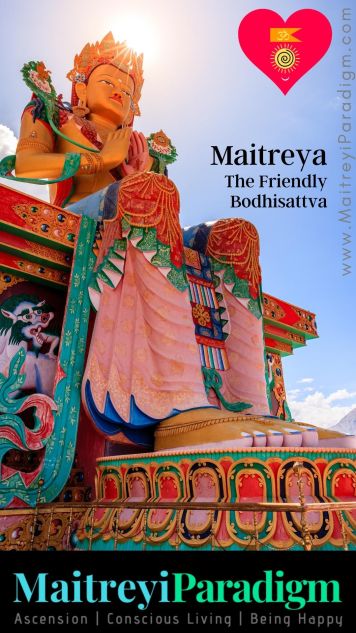
In the city of Leshan, you will find a UNESCO World Heritage Site called Leshan Giant Buddha. It is also called as Lingyun Giant Buddha. Its halo and golden color have been compared to the graceful presence of the original Buddha. This giant sculpture represents the Maitreya Buddha.

​If you want to learn more about Maitreya Buddha, then check out: Maitreya Buddha- The Friendly Bodhisattva that brings us hope of a bright and righteous future!!
Considering the size and appearance, this man-made sculpture of the Leshan Giant Buddha, is truly impressive. Those interested in Buddhism will find the structure a mesmerizing sight. This ancient statue has been on display since the 7th century AD.

​There are several reasons why you should visit the Leshan Giant Buddha. Besides its stunning beauty, the giant Buddha is also home to the mystical "halo" - a multicolored ring of light around the newly rising sun.   ​This halo is a natural phenomenon, which is formed by the diffraction and diffused reflection of sunlight on the surface of water droplets in the clouds. 
This rare sight caught the attention of thousands of locals, who rushed to witness this spectacular scene. Over the years, it has been part of many mystic musings about this Maitreya Buddha. The best time to visit Leshan to see this Lingyun Giant Buddha is in the month of April or October, when the weather is at its most pleasant.

The Leshan Giant Buddha is the world's largest stone statue of the Buddha. It is located in the province of Sichuan in China. Construction of the Leshan Giant Buddha began in the year 723 AD. 

The Leshan Giant Buddha is located within the Mount Emei Scenic Area. This Mount Emei area was inhabited over ten thousand years ago. It has many sacred sites and a large number of endemic species. This area has been recognized as a World Heritage Site since 1996. The Leshan Giant Buddha which is located in this area, is also one of the most famous sites in this area.  

The stone sculpture faces Mount Emei, with the rivers flowing below its feet. It is the largest and tallest stone Buddha statue in the world. This 233 feet statue which depicts a seated Buddha with his hands resting on his knees is caved in the Lingyun Mountain. It is carved into a cliff near the confluence of three rivers. The entire art piece is built in stone, except for the ears that were designed in wood, covered with mud on the surface to make clay, and attached to the head.

The building of this massive statue was initiated by the monk Hai Tong, who was concerned about the safety of the local people. Hai Tong believed that by building the statue, the turbulent waters of the three nearby rivers- Minjiang, Qingyi and Dadu River, would be pacified. Unfortunately, Hai Tong did not live long enough to see the completion of the statue. However, his disciples continued the project after he died. It took effort over several years and funding from various rulers and patrons for it to be finally completed. 
​The main way to visit the Leshan Giant Buddha is to take a boat trip to the base of the mountain. While there are no roads leading up to the mountaintop, the boat ride will give you the best angle for taking photos of the giant Buddha.

​Apart from the main attraction, there are dozens of pathways throughout the mountain that can be explored by foot. One can also climb up the several flight of stairs that have been constructed near this monument.
A complex architectural drainage system has been preventing the statue from eroding for the past 1,200 years. This complex drainage system has been incorporated in the very design of the sculpture and is truly a work of art and scientific marvel, in and of itself.

​Though over the years the Leshan Buddha has been affected by pollution emanating from unbridled development in the region. At the current time, we see many degradations and erosion from weathering, air pollution and swarms of tourists!

also check out:

Picture
  • Maitreya Buddha- The Friendly Bodhisattva that brings us hope of a bright and righteous future!!
  • ​Understanding the Basics of Buddhism and The Four Truths which lead to Nirvana (Enlightenment)
  • Origin and progress of Buddhist Tantra and the various Buddhist Tantric Texts
  • ​11 Amazing Thought Provoking Quotes by Gautama- The Buddha​
  • ​What are the spiritual benefits of hoisting and displaying the Tibetan Prayer Flags?
0 Comments

It is important to keep oneself focused and driven- Buddha's Teachings

7/29/2022

0 Comments

 
​Productivity depends on two factors: mental energy and a sense of internal motivation. When we're involved in work that we find personally meaningful, productivity naturally arises. But not every task carries deep personal meaning. Nevertheless, maintaining focus on longer-term goals can activate one's drive and energy. 

In addition to being able to achieve your goals, motivation will help you live a more fulfilling life. It will help you be the best version of yourself. By setting meaningful goals and committing to them on a regular basis, you'll be able to achieve them and enjoy your life to the fullest. 

Positive drive in life will help you become a better person and improve your confidence, relationships, and community.

There is an ancient teaching by The Buddha, that highlights this concept. It clearly indicates how being diligent is  important and is the chosen way of a wise person.
Picture
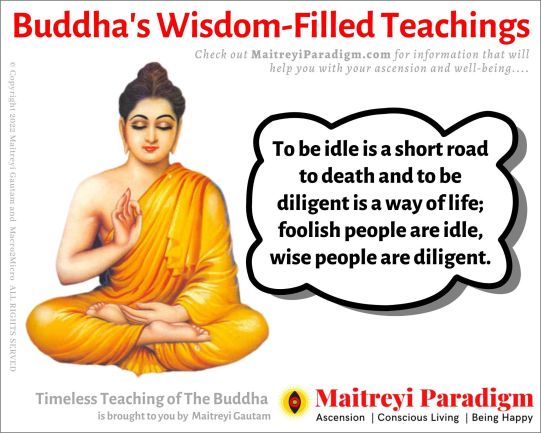
Teachings of The Buddha:   To be idle is a short road to death and to be diligent is a way of life; foolish people are idle, wise people are diligent.
Picture

continue reading...

  • ​Understanding the Basics of Buddhism and The Four Truths which lead to Nirvana (Enlightenment)
  • Origin and progress of Buddhist Tantra and the various Buddhist Tantric Texts
  • ​11 Amazing Thought Provoking Quotes by Gautama- The Buddha
  • Let go of your anger and take back your POWER!!
  • ​What are the spiritual benefits of hoisting and displaying the Tibetan Prayer Flags?
0 Comments

Let go of your anger and take back your POWER!! - Buddha's Teachings

5/18/2022

0 Comments

 
​Anger is an emotion that is very difficult to manage. People who have a problem with anger tend to obsess over "should-s" and "must-s." They tend to think about their own feelings and the thoughts of others. They may ignore the positive things in life, or they may allow small irritations to build up to the "final straw." Then they blow up over something that really should not have bothered them in the first place.

At an apparent level, we may feel that anger is bad, only when it is uncontrollable, as it can potentially lead to violent behaviors. But that is not the case. ALL anger is bad in one way or another, because it leads to a lower sense of self-worth and wellness!

We find that at times, anger is exhibited in more passive ways, such as sulking or ignoring people. In the latter case, a person may attempt to hide their feelings or harm themselves. Self-harm is most common among young people. These behaviors are often the result of past experiences that were never fully processed and expressed.

​Therefore, learning to identify the causes of your anger and then addressing the core points can help you feel more empowered and in better control of your feelings. 
Picture
You will realize that no one external has true power over you! Others cannot push your buttons… because ultimately you hold the key to how you feel. Instead of feelings merely happening to you, as if they were some 'reaction' to others people's triggering actions, you will realize that you have the ability to choose your thoughts and actions and these in turn will determine how you feel! 

At the onset, keep a simple goal- where your starting aim could be to reduce the amount of anger you feel in any given instance and reduce the time it takes you to restore back to normal balanced functioning before the triggering situation. 

Learning to not only manage anger, but actually "letting it go"… takes time, discipline, and sometimes even specialized help. In this regards, close friends, well-caring family members or a close-knit support group, such as a spiritual community can help you in myriad of ways to understand the underlying issues behind the anger. They can help you to strategically resolve them, while at the same time, also provide loving support to address and overcome those challenges. 

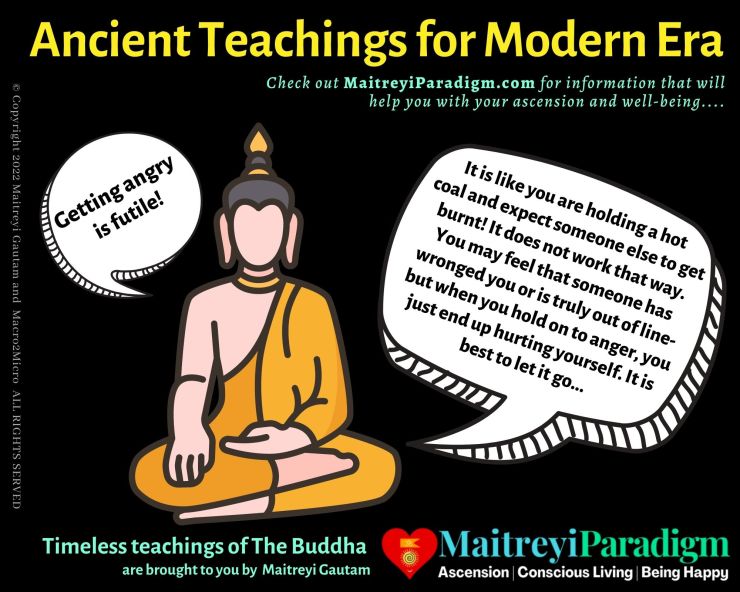
There is an ancient teaching by The Buddha which clearly indicates how being angry is not only futile, it is actually detrimental and self-harming!
Picture
Teachings of The Buddha:   Getting angry is futile! It is like you are holding a hot coal and expect someone else to get burnt! It does not work that way. You may feel that someone has wronged you or is truly out of line- but when you hold on to anger, you just end up hurting yourself. It is best to let it go...
​Keep in mind that choosing not to be angry is NOT about condoning a situation or someone's actions/ behavior! Letting go of anger is not the same as 'agreement'. 

What you are doing by letting go of anger is that- you do not let any external situation or any person have control over your inner well-being. By "letting go of anger", you choose to take back your power which you can then steer towards taking appropriate actions to address the situation… take actions that are in accordance with the Universal principles and also your own wellbeing.

continue reading...

  • Understanding the Basics of Buddhism and The Four Truths which lead to Nirvana (Enlightenment)
  • Origin and progress of Buddhist Tantra and the various Buddhist Tantric Texts
  • ​11 Amazing Thought Provoking Quotes by Gautama- The Buddha
  • Introduction to Tibetan Medicine- an alternative way to health & healing
  • ​What are the spiritual benefits of hoisting and displaying the Tibetan Prayer Flags?
0 Comments

Maitreya Buddha- The Friendly Bodhisattva that brings us hope of a bright and righteous future!!

5/5/2022

0 Comments

 
​The Buddha is a figure of great love in the Buddhist, Taoist, and Shinto traditions. The original Buddha was Gautam Buddha, who was born as Prince Siddhartha. After attaining enlightenment, he preached his first sermon on the Four Noble Truths in Sarnath (a place located around 10 kms from Varanasi- a town on the banks of the river Ganga, called Ganges in English), where the Buddhist sangha or community also came to life. 

It is believed that Gautam Buddha passed away from earthly existence after achieving nirvana in Kushinagar (a town in Uttar Pradesh, a town in northern India). Since then there have been many others following his teachings who have attained enlightenment and become buddhas. 

Gautam Buddha was a Bodhisattva who taught others the practice of great love. He meditated deeply on loving kindness and gave people the opportunity to experience it themselves. His presence caused the beings in the ten directions to rejoice. All these Buddhas embodied the qualities of universal love, peace, and compassion, and their actions are imprinted on the hearts of many people.
Picture
Picture
​The word Buddha means' The Enlightened One'. It comes from the root Sanskrit word, Buddhi- which indicates the intellect. Buddha is the one, who has been able to utilize the power of the intellect to discern the ultimate truth from the illusion of maya (this created material world) and so, is able to see thru the veil of this seeming reality into the boundless truth! 

The path to this enlightenment involves practice of moral & just conduct and meditation to gain deep insight as well as profound wisdom into the nature of our own ultimate reality. This allows one to deeply understand the mysteries of the cosmos. By following these principles of Buddhism, one can awaken truth in their mind and experience ultimate bliss.

These teachings of The Gautam Buddha and other Bodhisattvas over the centuries, make up important Buddhist texts. In addition to the teachings, the Buddhas themselves, and the Sangha, which include the Buddhist monastics and nuns, are sacred all in Buddhism.

According to Buddhist traditions, Maitreya is the future Buddha of this world. The name Maitreya is derived from the Sanskrit word 'maitrī', which means the 'friendly one'. The word 'maitrī' comes from the Deva (Divine Being)- Mitra, who is considered as the Lord of Friendship. It is written as Metteyya in Pali. 

In future, when the world situation degrades to the point where past and current teachings of The Gautam Buddha are not adhered to, it is believed that the Maitreya Buddha will appear on Earth to teach pure dharma- the righteous way of living. 

Maitreya Buddha will be the Bodhisattva who advances through all the levels of spiritual development until he became a fully enlightened Buddha. It is believed that he currently lives in the heavenly abode of Tushita. Tushita is the fourth of the six heavenly realms in the Buddhist tradition. It is believed to the place where future Bodhisattvas reside before taking birth as a Buddha on the earth plane.

continue reading...

  • Understanding the Basics of Buddhism and The Four Truths which lead to Nirvana (Enlightenment)
  • Origin and progress of Buddhist Tantra and the various Buddhist Tantric Texts
  • ​11 Amazing Thought Provoking Quotes by Gautama- The Buddha
  • Introduction to Tibetan Medicine- an alternative way to health & healing
  • ​What are the spiritual benefits of hoisting and displaying the Tibetan Prayer Flags?
0 Comments

How is illness caused according to Tibetan Medicine?

1/15/2022

0 Comments

 
Similar to Ayurvedic Medicine, Tibetan Medicine is based upon knowledge of the bodily energies or juices and good health is supposed to be based on the balance between these three energies These three energies being- Wind- The energy of movement, Bile- The fire of life and Phlegm- The fluid element. ​
Picture
These bodily juices and energies are not physical in nature but also have psychological and spiritual connotations. When these three energies are in balance, good health is obtained BUT when they go out of balance various illnesses arise, depending on the energy/ bodily juice that is out of balance. 

These three energies/bodily juices are supposed to go out of balance due to various factors- namely physical, environmental & seasonal factors and also spirit poisons such as greed, hate and ignorance or suppression leading to a spiritual blindness. 
​
Hence the psychological aspects of the balance are noted from the fact that these bodily juices/energies can be out of balance due to wrong thinking and straying from the right and healthy spiritual path of devotion and prayer. 

In addition, wrong diet, bad karma, bad climatic conditions, unfavorable influence of stars and spirits and demons are also supposed to cause this energy/bodily juices imbalance, thus causing sickness & ailments.

In this way, Tibetan Medicine, does not view an illness as merely a ‘result’ of some cause, but takes a wholistic view- which considers various aspect of our human existence. It truly considers the connection as well as the interdependencies of our mind, body and spirit connection. 

Because of this Tibetan Medicine attempts to heal the complete- i.e. whole person and not just ‘cure’ some ailment!!

Read further:

  • ​​Introduction to Tibetan Medicine- an alternative way to health & healing
  • What are the healing principles of Tibetan Medicine? i.e. How does healing happen with Tibetan Medicine?
  • 11 Amazing Thought Provoking Quotes by Gautama- The Buddha
  • Understanding the Basics of Buddhism and The Four Truths which lead to Nirvana (Enlightenment)
  • ​What are the spiritual benefits of hoisting and displaying the Tibetan Prayer Flags?
Picture
0 Comments

What are the healing principles of Tibetan Medicine? i.e. How does healing happen with Tibetan Medicine?

1/12/2022

0 Comments

 
Similar to the ancient healing science from India, Ayurveda, The Tibetan System of classification is based on the five elements. 

Which is to say, the Tibetan Medicine systems also believes that our bodies like nature, are made up of the five elements namely- Air, Fire, Water, Earth and Space. These constituents in turn make our body and our bodily juices/energies and thus need to be balanced to achieve good health. ​
Picture
​Air represents the neutral property, Fire the hot property and the Water/Earth represents the cold property and they represent the Wind, Bile and Phlegm bodily energies respectively. 

Each of these elements also has eight active forces such as heavy, oily, cool, dull, light, harsh, hot and sharp. Each of these elements also have some of these seventeen qualities namely, heavy, stable, dull, dry, fluid, cool, hot, sharp, oily, harsh, light, supple, pale, cold, gentle, smooth and flexible. 

The various interplay of these eight active forces and these seventeen qualities; increases or decreases the Bodily energies and thus brings about imbalance, further leading to illnesses and ailments.

So, in the Tibetan Medicine system, the methods of diagnosis involve Pulse Diagnosis as a primary and very important method. The right and the left wrist show the state of health or problem for various organs and these are noted differently for men and women. 
​
The second method of diagnosis is Urine Analysis and the third method is Tongue Diagnosis. 

Treatment in Tibetan Medicine involves, dispensing various medicinal herbs, which are carefully chosen to have the energies, and qualities that are in imbalance so as to bring about the required balance and thus good health to the patient. 
​
In addition, diet and lifestyle changes are also a mandatory part of a successful treatment. 

Moxibustion, and rituals such as Cupping, Cauterization & Blood Letting are also very well-known and often used treatment methods used particularly in detoxification, circulatory problems, injuries, bruising and inflammations.  

In addition to these, there are other methods which are occasionally used such as acupuncture, particularly with gold needles as well as spiritual and religious rites such as special prayers and so on.

Tibetan Medicine does view the whole person as a deep connection of mind-body-spirit.

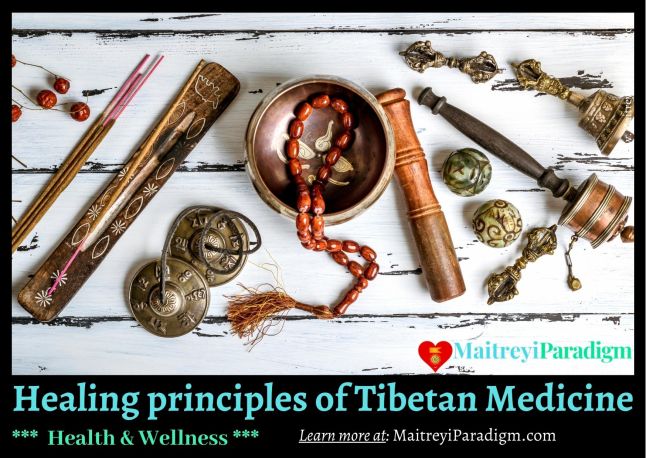
And because of this, such spiritual practices such as prayer, mantra chanting (a form of sound healing), other healing sounds like from the Tibetan singing bowls and other such traditional methods also form part of the entire healing session and mode of treatment.

Read further:

  • ​​Introduction to Tibetan Medicine- an alternative way to health & healing
  • 11 Amazing Thought Provoking Quotes by Gautama- The Buddha
  • Understanding the Basics of Buddhism and The Four Truths which lead to Nirvana (Enlightenment)
  • ​What are the spiritual benefits of hoisting and displaying the Tibetan Prayer Flags?
Picture
0 Comments

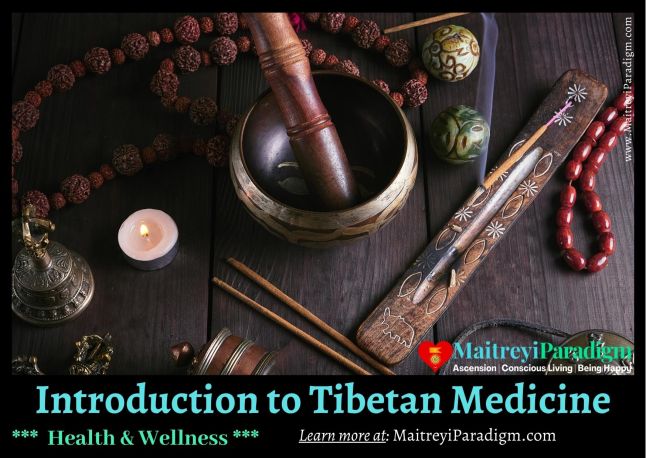
Introduction to Tibetan Medicine- an alternative way to health & healing

1/11/2022

0 Comments

 
Tibetan Medicine is an ancient method of health and healing. It has origins in the ancient Vedic science of healing from India, called Ayurveda. It is believed that the Buddha himself had given this medicinal knowledge during his teachings. In this regard, The Buddha is better known as “The Medicine Buddha”. 
​
The Medicine Buddha is regarded as the greatest healing and the King of Aquamarine Light and thus is given the highest respect and revered with love and devotion. It is believed that the Medicine Buddha has the healing knowledge to address all the possible 404 illness that can inflict our human system (mind, body and spirit).
Picture
​Tibetan Medicine treats the entire mind-body and spirit realm of the patient, as against of only the body, which is typically the case of modern medicine and the min-body, which is the case of traditional herbal medicine. In recent years as people are looking for healing alternatives that are natural and more in tune with our bodily systems, Tibetan Medicine has gained much recognition (and rightly so) in recent years!
​
The energy as well as spiritual aspect of sound, colors, aroma and so on play an important role in enhancing the medicinal herbs that are administered to a person. This helps to effectively bring about a wholistic healing experience for the person.

It is the tantric master, Yuthog Gonpo, who added some more informative data to the original medical texts to bring the relevance in tune with the then current times to give the Four Tantras. These Four Tantras form the basis of the Tibetan Method of healing and looking at body types and their associated ailments. 

These Tantras possess a character, similar to the Huangdi Neijing of the Chinese Medicine or the Samhitas of the Ayurvedic Medicine. The four Tantras utilize the knowledge of the three-fold nature of the bodily energies along with Chinese Astrology and Pulse Diagnosis method to address the entire person and the ailment in specific to bring about the required cure. 

Each of the four Tantras examines the medical knowledge of healing from different perspectives- ultimately bringing about a wholistic healing experience!

Read further:

  • ​​11 Amazing Thought Provoking Quotes by Gautama- The Buddha
  • Understanding the Basics of Buddhism and The Four Truths which lead to Nirvana (Enlightenment)
  • ​What are the spiritual benefits of hoisting and displaying the Tibetan Prayer Flags?
Picture
0 Comments
<<Previous
Forward>>
    Picture
    ... also check out our
    Vedic Wisdom Blog

    Categories

    All
    Active Lifestyle
    Affirmations
    A Message For You
    Ancient Civilizations
    Ancient Therapies
    Ancient Wisdom
    Angels And Saints
    Animal Wisdom
    Archetypes
    Aromatherapy
    Art Card Journaling
    Arts And Crafts
    Ascension
    Beliefs Or Superstitions
    Bio Based Healing
    Body Based Healing
    Book Excerpts
    Book Summaries
    Brilliant Beings
    Buddhism
    Comfortable Living
    Conscious Living
    Crystal Energy
    Currently In News
    Daoism Or Taoism
    Death And After
    Divine Feminine
    DIY Lifestyle
    Emotional Wellbeing
    Energized Space
    Energy Healing
    Financial Wellbeing
    Flower Messages
    Global Vedic Wisdom
    Green Living
    Guidance
    Healing Activities
    Healing Jewelry
    Healing Music
    Healthy Eating
    Helpful Info Tips
    How To...
    Insights And Intuition
    Inspired Living
    Journaling
    Journey To Oneness
    Joy And Happiness
    Karma
    Life Adventures
    Life Management
    Magical Living
    Meditation
    Mind Body Healing
    Mindfulness
    Money Luck
    Mystic Christianity
    Mystic Islam
    Mystic Judaism
    Natural Living
    Nature Guidance
    Nutritious Foods
    Oracle And Divination
    Original Artworks
    Our Path Our Journey
    Past Life Therapy
    Personal Productivity
    Photon Of Wisdom
    Quantum Spirituality
    Quick Healthy Eats
    Relationships
    Sacred Geometry
    Self Development
    Self Discovery
    Shaman Wisdom
    Short Stories
    Sleep And Dreams
    Soul Connections
    Sounds And Mantras
    Special Messages
    Spiritual Awareness
    Spiritual Lessons
    Spiritual Regression
    Suggestive Prompts
    Tantra
    Think On This
    Tools And Techniques
    Travels And Pilgrimages
    Travel Stories
    Tree Magic
    Videos
    Ways To Energize
    Ways To Relax
    Wealth And Success
    Wellness
    Words Of Power
    Yoga

    Also check out...

    Vedic Wisdom Blog

    Picture
    Picture
    Picture
    Picture
    Picture
    Picture
    Picture
    Picture
    Picture
    Picture

    Stay in touch

    Picture
    Picture
    Picture
    Picture
    Picture
    Picture
    Picture
    Picture
    Picture
    Picture
    Picture
    Picture
    Picture
    Picture
    Picture
    Picture
    Picture
    Picture
    Picture
© Copyright 2025 Sandhya Bhat & ​Macro2Micro Media *** ALL RIGHTS RESERVED *** See Terms & Conditions for details on this site usage.