Maitreyi Paradigm- The Art and Science of Being Happy
  • Home
  • Maitreyi
    • Artistic Expressions
    • The Yogini Journey
    • Magical Paradigm
    • Blog
    • Contact Me
  • Ascension
    • Ascension Insights
    • Energy Dimensions
    • Quantum Ascension
  • Himalayan Masters
    • Ashtanga Yoga
    • Sounds and Music
    • Vedic Wisdom
  • Self-Discovery Journals
    • Books
    • Everyday Use Journal-Notebooks
  • Healing
    • Arts and Crafts
    • Daily Inspiration
  • Magic
    • Crystal Energy
    • Natural Mysticism
    • Inspired Living
  • Lifestyle
    • Green Living
    • Wellness

Why is Hinduism also called as 'Sanatan Dharma'?

8/16/2023

0 Comments

 
Hinduism is often referred to as "Sanatan Dharma" in many Indian languages. The term has a deep philosophical and cultural significance.

"Sanatan" is a Sanskrit word that means eternal, everlasting, or unchanging, and "Dharma" is a multi-faceted word with several meanings, including law, duty, morality, ethics, and religion. So, when combined, "Sanatan Dharma" can be understood as the "eternal religion" or the "eternal way of life."

Here are a few reasons why Hinduism is called Sanatan Dharma:
  1. Ageless Tradition: Hinduism is considered one of the oldest religions in the world. Its roots can be traced back to the Indus Valley Civilization (around 2000-1500 BCE) and it has been evolving ever since. This long and uninterrupted tradition gives it an eternal quality.
  2. Universal Principles: Sanatan Dharma is not just a religion but a way of life that espouses universal principles such as truth, non-violence, justice, compassion, and self-discipline. These principles are seen as eternal and unchanging, transcending time and culture.
  3. Inclusive Philosophy: Hinduism has a very inclusive philosophy. It accommodates a wide range of beliefs, practices, and traditions within its fold. This inclusivity is seen as an eternal characteristic of the religion.
  4. Endless Cycle of Creation and Destruction: In Hindu cosmology, the universe undergoes an endless cycle of creation, preservation, and destruction. This cyclical view of time gives the religion an eternal quality.
  5. Continuity of Spiritual Knowledge: The Vedas, the oldest sacred texts of Hinduism, are believed to be a direct revelation of divine knowledge that has existed eternally. This eternal knowledge, passed down through generations, is central to the concept of Sanatan Dharma.

In summary, the term "Sanatan Dharma" reflects the timeless and eternal nature of Hinduism's principles and practices, and its ability to adapt and absorb different ideas while maintaining continuity with its ancient roots.
0 Comments

Your comment will be posted after it is approved.


Leave a Reply.

    Picture

    ... also check out
    ​our main Blog

    Picture

    Vedic Wisdom

    Categories

    All
    Aartis And Chalisas
    Arts From Bharat
    Festival Celebrations
    Gods And Deities
    GyanBites
    Help From Vedas
    Inspiring Quotations
    Jyotish For Ascension
    Myths And Beliefs
    Practical Ayurveda
    Prayers And Sadhanas
    Rishis And Sages
    Shloka For The Week
    Stories And Legends
    Tantra Mantra Yantra
    The Bhagavad Gita
    Thought Bytes
    Tools And Methods
    Vedic Archetypes
    Vedic Living
    Vedic Maths
    Vedic Philosophies
    Vedic Science
    Vedic Sounds
    Vedic Symbolism
    Vedic Teachings
    Vedic Technologies
    Vedic Texts
    Vedic Tradition
    Wisdom Bytes

    Picture
    Picture
    Vedic Culture, which   is the culture of the original Himalayan Masters,    is one of the most advanced ancient civilizations.  It is a tradition which has given mankind several treasures such Yoga, Meditation, Conscious-Living and Vedic Sciences such as Ayurveda, Vedic Physics & Vedic Mathematics.

    It was always a scientific culture that understood the very mechanics and workings of this Universe. Their deities, their gods and goddesses were all a way of expressing and explaining these energies and their inter-working. Modern Quantum Mechanics is just starting to understand string theory, dark matter etc. which have all been fundamental to the Vedic understanding. Because of this, they developed ways and methods which allowed one to best tap into life-energy itself.

    Vedic Culture, as it was practiced by the Himalayan Masters, was always a "way of life" and not a religion.

    Their basic view was that, there is only ONE Supreme God-head (God as our creator) and each one of us can find our path to it- experience union with that divinity (Yoga) in their own way.

    Because of this, anyone with any religious affiliations and beliefs can still benefit from their knowledgeable ways of Vedic Wisdom.

    Our attempt here is to present this ancient wisdom in a modern light, so our readers can interpret the true, essential meaning more easily and then extrapolate it to their own specific scenarios and enhance the quality of their life and being-ness.
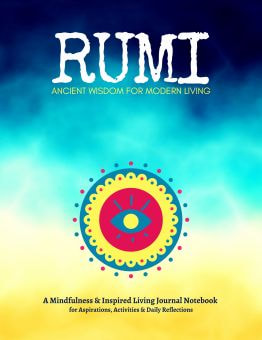
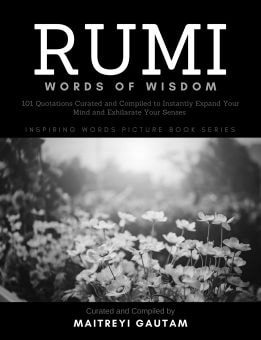
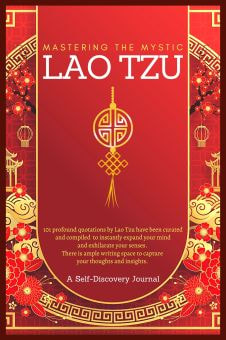
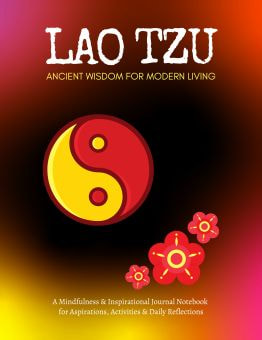
    Check out Maitreyi's latest books...
    Picture
    Picture
    Picture
    Picture
    Picture
    Picture
    Picture
    Picture
    Picture
    Picture
    Picture
    Picture
    Picture
    Picture
    Picture
    Picture
    Picture
    Picture
    Picture
    Picture
    Picture
    Picture
    Picture
    Picture
    Picture
    Picture
    Picture
    Picture
    Picture
    Picture
    Picture
© Copyright 2025 Sandhya Bhat & ​Macro2Micro Media *** ALL RIGHTS RESERVED *** See Terms & Conditions for details on this site usage.